How to Plan a Portugal Fishing Trip Without Licence Problems
If you want to fish in mainland Portugal, the short answer is this: you need a recreational sea fishing licence before your line touches the water, and you can arrange it online in about three minutes without a Portuguese tax number or a government portal login. Everything else — rods, tides, marks, bait — becomes much easier once that piece of paperwork is settled. This article walks through the background that makes the rest of your trip make sense, so you can plan with confidence rather than guesswork.
I work with visiting anglers and expat residents who want to enjoy portugal fishing without tripping over bureaucracy. The pattern I see is always the same: people book flights and accommodation, pack their tackle, and only then discover that shore fishing from the coast is regulated. By the time they start searching, they are standing in a hotel lobby with poor Wi-Fi and a rising sense of panic. Let us avoid that.
Why Portugal Fishing Is Regulated in the First Place
Portugal has roughly 1,800 kilometres of mainland coastline, plus the Azores and Madeira archipelagos. That is an enormous resource, and it supports everything from subsistence angling to a serious sport-fishing tourism sector. Regulation exists to protect fish stocks, keep commercial and recreational interests from colliding, and give authorities a way to count who is taking what.
The body responsible for recreational sea fishing on the mainland is DGRM, the Directorate-General for Natural Resources, Safety and Maritime Services. If you are fishing from the shore, a pier, a beach, or a boat for leisure purposes, the licence requirement generally applies. It does not matter whether you are a Portuguese citizen, an EU visitor, or a traveller from further afield. The rule is about the activity, not your passport.
What catches people out is the assumption that a licence is only for boat fishing or only for catching certain species. In practice, the requirement is broad. A tourist casting a light spinning rod off a rocky Algarve headland is in the same regulated category as a resident fishing from a harbour wall in the north. Understanding this early saves you an awkward conversation with a maritime authority officer.
What the Licence Actually Covers and Who Needs It
A recreational sea fishing licence for mainland Portugal covers non-commercial angling in the sea and in specified coastal waters. It is personal, so each angler needs their own. If you are fishing with a partner or a group, everyone who holds a rod should be covered. Children are often subject to different rules, and it is worth checking the current age thresholds rather than assuming.
The licence is not a catch-all permit for every body of water. Freshwater fishing in rivers and reservoirs falls under different regional rules and often requires a separate permit from the relevant authority. If your trip mixes sea and river angling, treat them as two separate planning tasks.
This is where a service like fishing license assistance becomes genuinely useful. Instead of navigating a Portuguese-language government interface, you answer a few straightforward questions, pay by card, Apple Pay, or Google Pay, and receive confirmation. For a visitor on a short trip, that simplicity is the difference between fishing legally and fishing nervously.
Two practical points I always raise with clients. First, carry proof of your licence with you, on your phone or printed, because checks can happen at any time. Second, keep your details accurate. A licence issued under a misspelled name or a wrong date of birth can cause problems if it is inspected.
Matching Your Licence to the Fishing You Actually Want to Do
Portugal offers a remarkable range of angling, and knowing what you are targeting helps you plan the rest of the trip. The most common styles for visitors are shore spinning, bait fishing from beaches and rocks, and light boat fishing with a charter skipper.
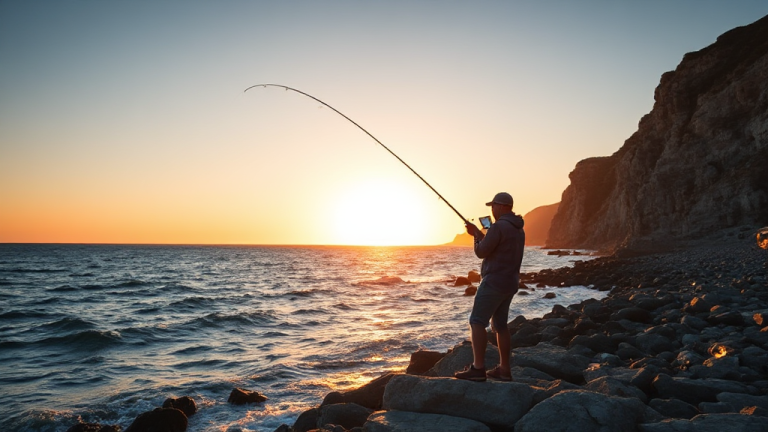
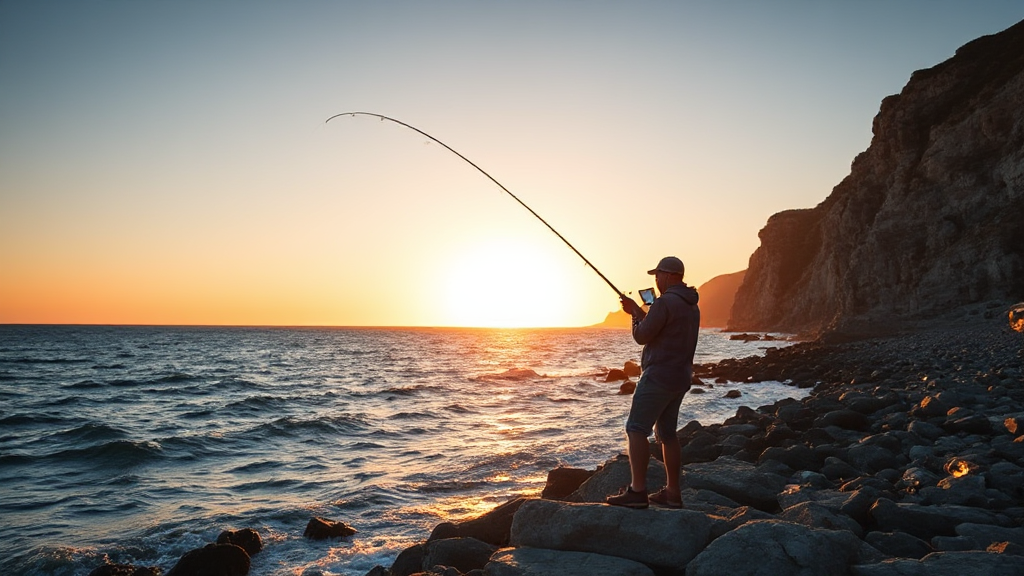
Shore spinning is the most accessible. You can work lures from headlands and sandy beaches for bass, bluefish, and mackerel, often with nothing more than a nine-foot rod and a handful of metals. The Algarve and the Atlantic coast north of Lisbon are popular for exactly this reason. It is mobile, inexpensive, and rewarding once you learn to read the water.
Bait fishing from beaches suits anglers who prefer to set up and wait. Lugworm, squid, and prawns account for a wide variety of species, and the long Atlantic swells push fish close to shore in many locations. Rock marks offer deeper water and bigger fish but demand more care, especially when the sea is running.
Boat fishing, whether from a small hired boat or a guided charter, opens up reefs and offshore grounds. If you go this route, confirm with the skipper what licence arrangements are expected on board, because responsibilities can differ between a private trip and a commercial charter.
Species you might encounter include European seabass, gilthead bream, sea bream more generally, mackerel, horse mackerel, bluefish, conger eel, and various flatfish. Further south, warmer water brings in different opportunities. Each target suggests different tackle, bait, and timing, and each is a reason to have your paperwork sorted before you travel rather than during the trip.
Building a Practical Plan Before You Travel
Here is the sequence I recommend to cautious clients who want a smooth trip.
Start with the licence. Do it early, before you book the non-refundable parts of your trip. Applying online takes about three minutes, requires no NIF and no government portal account, and accepts the payment methods most travellers already have on their phones. Doing this first removes the single biggest source of stress.
Next, decide where you are basing yourself and what kind of fishing that location supports. A beach-focused trip and a rock-hopping trip need different footwear, different tackle, and different safety awareness. The Atlantic is powerful, and a calm-looking ledge can become dangerous quickly when the swell builds. Never fish alone on exposed rocks, and always keep an eye on the tide and the weather forecast.
Then think about gear. If you are flying, travelling light is usually the right call. A compact spinning setup covers a lot of ground, and local tackle shops can supply bait, leaders, and consumables. Buying locally also gives you a chance to ask staff about current conditions and regulations in that specific area.
Finally, plan your documentation. Keep a digital copy of your licence, your identification, and any charter booking confirmations in one place on your phone, and consider a printed backup in case your battery dies. If you are fishing in a protected area or near a harbour, check for local restrictions, because some zones have additional rules on top of the national framework.
Language matters less than you might expect. Many people working in tourism and tackle shops speak English, and the licence process itself is designed to be straightforward. What matters more is having the right permit and behaving responsibly around other water users, from swimmers to commercial vessels.
For anyone who wants to combine a coastal holiday with proper fishing in portugal, the sensible closing action is simple: sort your licence first, then build the rest of the trip around it. Book the accommodation, choose the marks, pack the rod, and leave the administration behind. That way, the only thing you are thinking about on the shoreline is where the fish are.
About the Author